
Two of the most common questions we receive when a tree fails without warning, are usually, “How quickly can you respond?” and “How much will it cost?” Both are reasonable questions. A tree resting on a house, blocking the only access, or precariously standing after a storm is very different from a tree that can be inspected, quoted, and scheduled in advance.
At Barren Tree Solutions, we believe clients should understand how emergency work is classified and billed before authorizing it whenever circumstances allow. There is no single price for an emergency tree removal because the condition of the tree, the target(s) at risk, the degree of difficulty, the resources required, and the scheduling challenges can vary substantially. Emergency response is therefore generally billed according to the time, personnel, equipment, and supporting resources required to respond safely and effectively.
This page is designed to explain the difference between standard, urgent, and emergency tree work; how each type of service is priced; and why emergency response can cost more than a planned tree removal.
IMPORTANT AVAILABILITY NOTICE: Barren Tree Solutions does not provide continuously staffed 24-hour service. Emergency response is offered as personnel, equipment, road conditions, weather, and existing commitments reasonably allow.
Additionally, if there is an immediate threat to life, call 911. If a tree or limb is touching or has brought down a power line, remain at least 30 feet away and contact the utility before contacting a tree service.
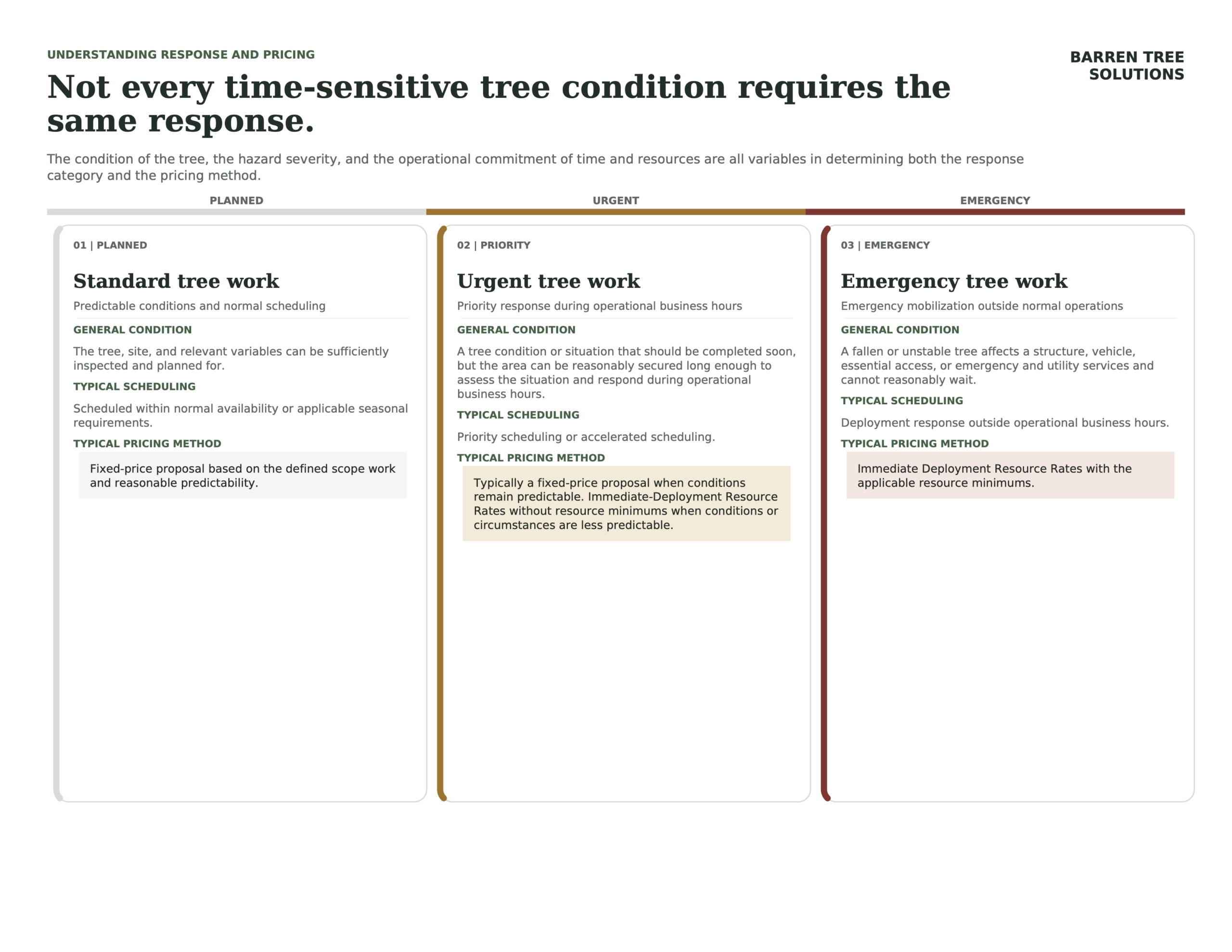
Standard tree work can usually be inspected in advance, quoted at a fixed price, and scheduled in an orderly manner; it is typically lower risk, and preventative in nature.
Urgent and Emergency work often cannot. The tree may be unstable, partially supported by a structure or another tree, under significant compression or tension, or positioned in a way that prevents a complete inspection before work begins.
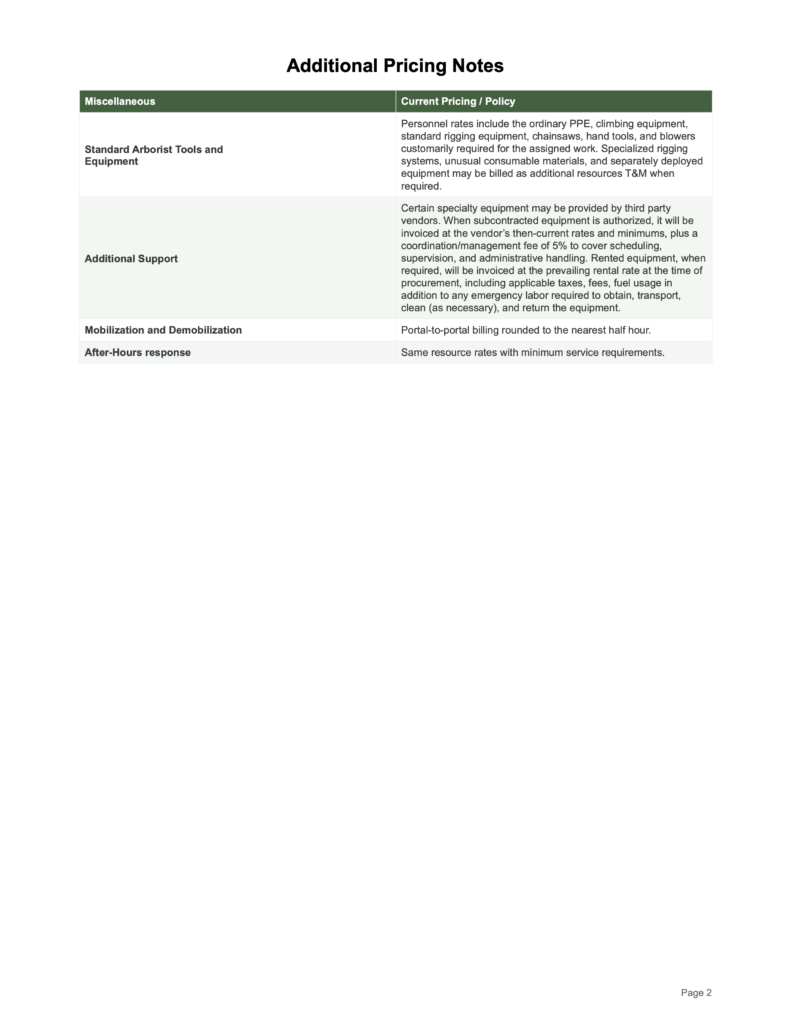
For these reasons, emergency response is normally billed on a time-and-materials basis using a resource rate schedule. Charges are based on the personnel, equipment, vehicles, materials, and supporting resources deployed or reasonably committed to the work, and at times subject to the applicable minimums. The entire rate sheet is not automatically charged to every project.
Urgent tree work involves a tree condition or time-sensitive situation that should be addressed sooner than normal scheduling would allow. Urgent work may involve a tree-related hazard, or a project deadline that requires accelerated scheduling.
Examples may include:
In terms of pricing, urgent tree work can be priced in different ways depending on the predictability of the conditions and the response required. When the scope can be reasonably determined, the work may be provided under a fixed-price proposal with an additional fee for priority or accelerated scheduling. When conditions are less predictable or personnel and equipment must be redirected immediately but within operational business hours, the work may be billed using the Immediate Deployment Resource Rate Schedule without resource minimums.
In some cases, both methods may be used: some resources are immediately deployed to mitigate the hazard, while the remaining removal, debris cleanup, or other nonessential work is completed later under a separate fixed-price proposal.
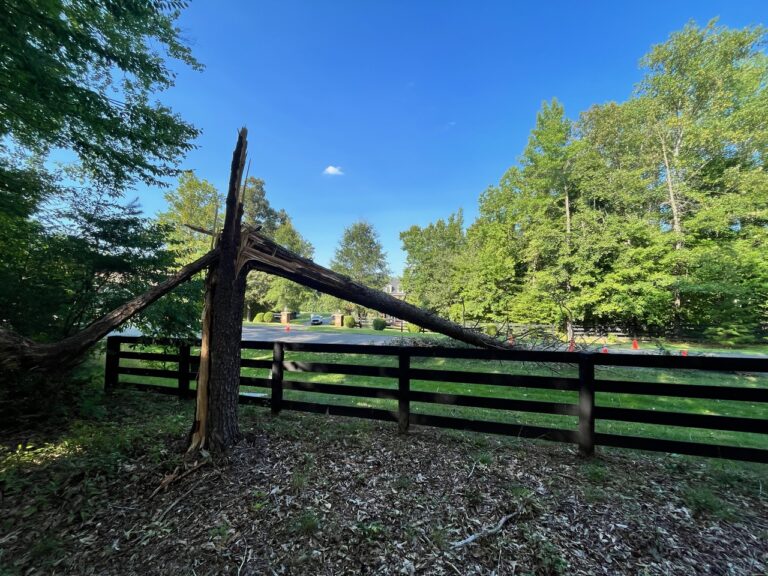
Emergency tree work generally involves a tree or tree part that has already failed, is actively failing, or presents a condition for which delaying action could result in injury, significant property damage, or disruption of essential access or services.
Unlike urgent tree work, an emergency condition cannot be reasonably managed simply by restricting the affected area and waiting for normal business-hour availability. The hazard may be active or imminent, the consequences of failure may be significant or severe, or the affected area may be impossible or impractical to secure. The condition may require personnel and equipment to be redirected immediately or mobilized outside normal operational hours.
The appropriate response is determined by many factors, including but not limited to the severity and immediacy of the hazard, evidence of continued movement or deterioration, the people and property exposed, incoming severe weather, the ability to restrict the affected area, etc…
Examples may include:
Emergency work is normally handled through immediate deployment and billed on a time-and-materials basis using the applicable resource rates. When the response requires mobilization outside operational business hours, applicable resource minimums may also apply because personnel must be recalled and equipment, vehicles, lighting, and supporting resources must be prepared specifically for the deployment.
Emergency response does not always mean completing the entire tree removal and cleanup during the first visit. The initial objective may be to reduce the active hazard, restore essential access, remove tree material from a structure, or stabilize the site. Remaining tree removal, debris handling, stump grinding, or restoration work may be scheduled after the property has been reasonably secured.
Emergency work is billed according to the resources required for the response. Depending on the condition, these resources may include arborists, climbers, equipment operators, ground personnel, cranes, Treemek equipment, aerial lifts, loaders, chippers, hauling vehicles, traffic control, lighting, mats, rigging, tarps, and administrative documentation.
Billable time may include:
This is commonly called portal-to-portal billing because the emergency deployment begins when the assigned resources leave their operating location and ends after they return and complete the work reasonably associated with that response. Hourly time is rounded to the nearest half hour increment.
Unless specifically stated otherwise, equipment rates do not include an operator. Required personnel are billed separately at the applicable personnel rate. Each employee is billed only once for the role performed, even when that employee operates more than one resource during the deployment.
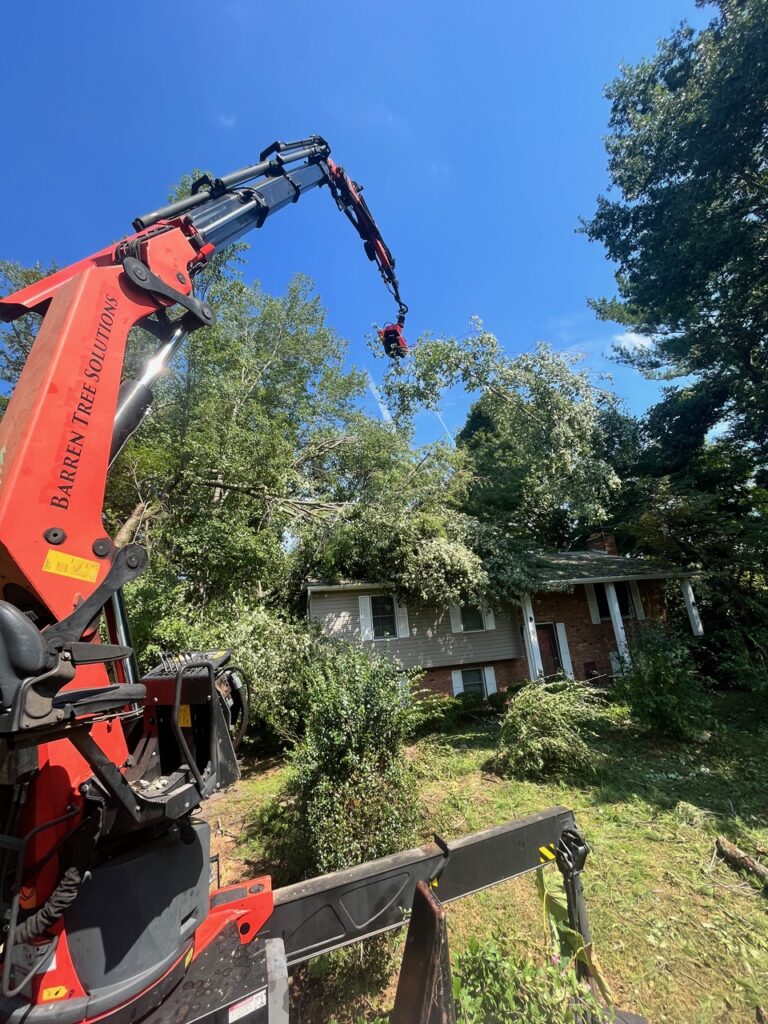
Emergency work is billed according to the resources required for the response. Depending on the condition, these resources may include arborists, climbers, equipment operators, ground personnel, cranes, Treemek equipment, aerial lifts, loaders, chippers, hauling vehicles, traffic control, lighting, mats, rigging, tarps, and administrative documentation.
Billable time may include:
This is commonly called portal-to-portal billing because the emergency deployment begins when the assigned resources leave their operating location and ends after they return and complete the work reasonably associated with that response. Hourly time is rounded to the nearest half hour increment.
Unless specifically stated otherwise, equipment rates do not include an operator. Required personnel are billed separately at the applicable personnel rate. Each employee is billed only once for the role performed, even when that employee operates more than one resource during the deployment.
A minimum is the smallest billable commitment for a particular resource. For example, if a resource has a four-hour minimum and is used for two and one-half hours, four hours are billed. If it is required for six hours, six hours are billed.
When several resources work together, each is billed for the applicable time. A four-hour deployment involving a worker, operator, loader, chipper, and truck does not mean that 20 hours elapsed; it means that five separate resources were committed to the operation for the same four-hour period.
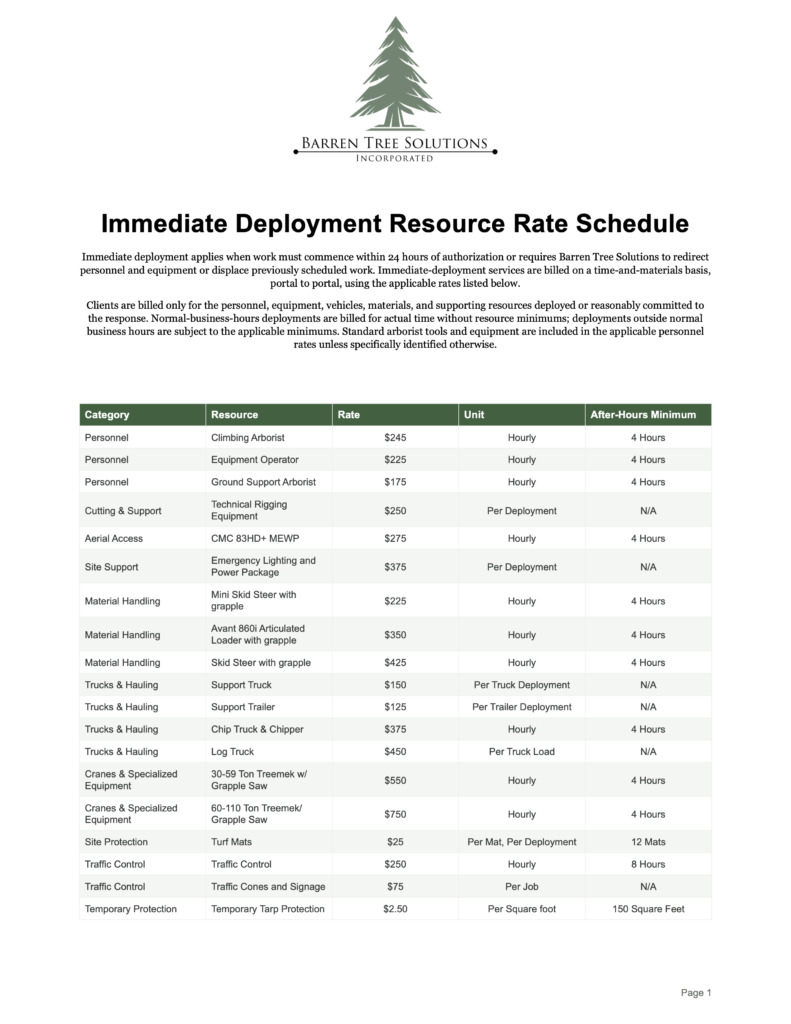
A standard tree removal can usually be inspected in advance and priced according to reasonably predictable site conditions, equipment needs, degree of difficulty, and scheduling requirements. Emergency and urgent tree work provides less certainty.
A failed or storm-damaged tree may be resting on a structure, suspended in another tree, under substantial compression or tension, or inaccessible to conventional equipment. Its weight may be supported by damaged wood, roofing, framing, nearby trees, utility infrastructure, or other objects that were never intended to carry that load.
The full condition of the tree may not become apparent until work begins. Damaged wood can shift as weight is removed, hidden defects may be exposed, and loads may behave differently than expected. Each cut or lift can change the forces acting on the remainder of the tree or structure. These conditions increase the degree of difficulty and may require additional personnel, controlled rigging, aerial access, remote-operated machinery, or crane-assisted removal methods.
Emergency response may also require personnel and equipment to be mobilized with limited notice. Crews may be recalled outside of business hours, scheduled work is interrupted, and specialized equipment may need to be loaded, redirected, or inspected before deployment. Work may also occur during darkness, severe weather, utility interruptions, restricted access, or widespread storm conditions. These conditions can reduce production and require additional resources, site protection, and safety measures.
Emergency pricing therefore reflects the urgency, uncertainty, working conditions, degree of difficulty, and resources required to respond safely and effectively—not simply the amount of wood removed or the time spent making cuts.
Whether emergency tree work is covered or not depends on the specific insurance policy and the insurer’s coverage determination. Barren Tree Solutions cannot guarantee that an insurance carrier will pay all or any portion of emergency tree work.
When applicable, our initial response is performed as emergency loss-mitigation work rather than routine tree maintenance. This work addresses an existing tree failure or active hazardous condition and may include removing tree material from a structure, reducing continuing loads or movement, preventing additional property damage, restoring essential access, providing access for emergency or repair personnel, or temporarily stabilizing the tree or affected area.
Emergency mitigation differs from normally scheduled tree service because it responds to an existing loss or an immediate condition that may cause further damage if left unaddressed. Routine maintenance, preventative pruning, elective removal, and removal of a standing tree that has not failed or damaged property are generally separate from emergency loss mitigation.
The emergency-mitigation phase may end once the immediate hazard has been reduced, essential access has been restored, tree material has been removed from the affected structure, or the property has been reasonably stabilized. Remaining tree removal, debris hauling, nonessential cleanup, stump grinding, landscape restoration, or other work may be completed later under a separate scope. When practical, our documentation will distinguish between the initial mitigation work and any subsequent completion or cleanup work.
The property owner remains responsible for all authorized work and for any deductible, excluded charge, coverage limit, depreciation, holdback, or amount not paid by insurance. The property owner’s payment obligation to Barren Tree Solutions is not contingent upon claim approval, the insurer’s coverage determination, or the timing or amount of any insurance payment.
We can provide standard photographs, invoices, resource and time records, and a factual summary of the conditions observed and work performed. We do not interpret insurance policies, determine coverage, prepare or file a claim on the property owner’s behalf, negotiate a claim or settlement, represent the property owner in the claims process, or act as a public adjuster.
If time and conditions allow, contact your insurer to report the loss before authorizing work that is not immediately necessary to protect people from harm, restore essential access for emergency services, or prevent additional property damage. Ask what photographs, estimates, invoices, or other documentation the insurer requires. When it is safe to do so, photograph the condition before work begins and retain all invoices and receipts.
Do not delay calling 911 or the appropriate utility service provider when people, electrical conductors, gas lines, or other essential services may be in danger.
If a tree has failed, is resting on a structure, is blocking essential access, or appears to be actively changing, call Barren Tree Solutions at (703) 586-9691. If it is safe to do so, photographs taken from outside the potential fall zone can help us evaluate the likely response needs.
For a concerning tree that can be safely isolated, schedule an estimate or arborist assessment. To understand how planned removals are priced, visit our tree removal cost page or our general tree care pricing page.
Life-safety and utility reminder: Call 911 for an immediate threat to life. For a tree or limb touching electrical conductors, stay at least 30 feet away and contact your power service provider. Do not approach the tree or line until the utility has made the electrical hazard safe.
For FAQ about Emergency Tree Removal please visit our FAQ Page