Factors That Impact Tree Care Pricing

At Barren Tree Solutions, we understand the frustration of not being able to see some form of pricing or costs when building a budget for a project, service, or product.  “How much does it cost?” Whether “it” is tree removal, tree trimming, or stump grinding, this is the most common question we receive when it comes to our services –  and why shouldn’t it be?
 
Too often you are solicited with why you need to have your tree cut down or why you are at risk if you hire a certain company. Other times you might be inundated with the self-prescribed accolades such as “we are the premiere tree care company, therefore you should hire us.” 
 
Yet, seldom does pricing ever lead the “informational barrage” you get when inquiring about tree care. At Barren Tree Solutions, we strive to deliver exceptional value for your investment by providing as much information and education as we can, and by performing our work safely, efficiently, and with intention. We also strive to help you plan and budget for your projects. It is no secret that tree care is expensive, therefore it is not only important to plan in advance as far as possible for these expenses, but it is also important to understand why it costs so much.
 
Below we will dive a little deeper into what goes into costs and pricing in order for you to plan accordingly and understand more of what we take into account on every project we estimate. 

Variables: Known And Unknown

While appearing simple on the surface, tree care is quite complex and the process is more involved than one may assume. While there are constants in arboriculture, such as tree physiology, the field is heavily influenced by variables such as environmental conditions, human management practices, and interactions within ecosystems. Successful tree care requires an understanding of both tree biology and the changing conditions that affect sustained health and longevity.

Costs associated with any type of service in the tree care industry are not just based on the obvious variables such as labor, trucks, chippers, chainsaws, and disposal; they also involve a number of unknown or less obvious variables to most consumers. These variables range anywhere from continued training/education, pre and post project operations, planned and unplanned maintenance or repairs, to insurance, taxes, facility costs, and other operational expenses.  Just existing as a company comes at an expense; while a company is providing careers, training, and tools for their employees, it is also taking into account insurance, maintenance, and savings to ensure seamless operations despite the unforeseeable ebbs and flows. The equipment, PPE, safety protocols, and training, as well as the facility and administration, are all part of the organized process intended to assure the client that their project will be safely and efficiently completed with little to no worry. 

When it comes to a tree or a job-site there are a number of variables taken into account that have some of the greatest impact on pricing.

For example, a small tree located in a backyard surrounded by landscape plants, beds, and décor, with access limited to a man-sized walking path in a densely populated urban townhouse area more than 15 to 20 miles from a company’s base may cost as much as, or more than, a medium-sized tree in an open front yard.

In contrast, a medium-sized tree in a single-family home neighborhood with no surrounding obstacles, easy access, and a distance of less than 5 to 8 miles from the company’s base may require fewer resources and therefore cost less.

Below we will highlight some of the factors that should be taken into account when developing a price for tree care.
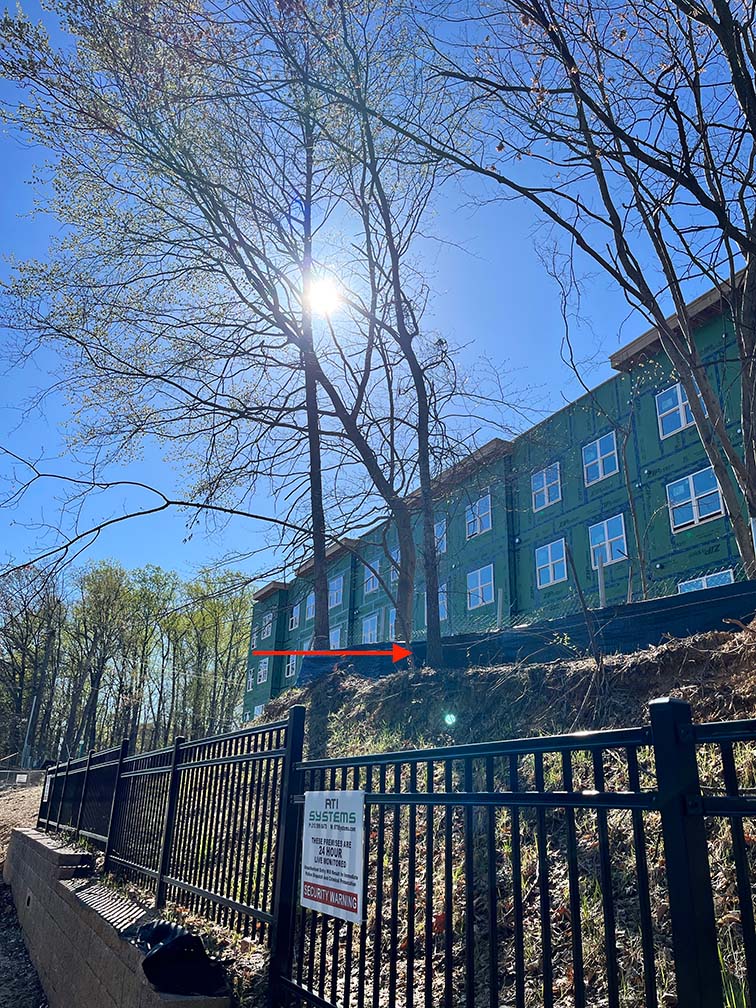
Trees in a hard to reach location
  • Size & Location – Tree size, site location, tree location on the site, and accessibility to both the site and the tree are key variables in determining the process and logistics in any project.
  • Obstacles – Above and below ground utility lines, septic systems, fencing, landscaping, pools, decks, homes, and vehicles are just a few of what sort of obstacles the average urban job-site may contain.  Whether they can be moved or avoided, obstacles not only add time, but can also be a hazard, adding risk to our process.  Depending on the level of risk, special planning or processes may be required to keep our arborists safe while performing their work.
  1. Condition – Tree species, health, and structure are also important variables to pay attention to when developing a price.  Living trees with a good structure, living trees with compromised structure, and dead trees with a compromised structure will all be handled differently.  Site conditions such as terrain type, soil saturation levels, open or constrained work area, and/or the presence of potential hazards like bees, poison ivy, and animal feces affect the procedures necessary to perform the task at hand.  Identifying site conditions and hazards as well as understanding tree biology, tree mechanics, and the physical forces applied in tree care operations are crucial in order to develop safer work plan.
  • Logistics – This is perhaps the most overlooked or unknown variable. Street size, traffic volume, available parking, ingress or egress restrictions, available space for debris processing and disposal site location are all minor but significant variables that dictate the resources and planning required to perform the work safely and efficiently. 

We Offer Financing Through GreenSky

“Pricing in tree care is a riddle, wrapped in a mystery, inside an enigma.” Patrick Masterson

Tree Removal Pricing

Tree Pruning Pricing

Stump Grinding Pricing

Emergency Response Pricing

Book an Estimate